Architecture, performance, security — platforms built to last
Gemini agent: Google turns enterprise AI into a coworker
By SMART SOLID SOLUTIONS
On 8 October 2026, at its Gemini at Work event, Google Cloud presented Gemini agent: a single, universal agent for work that answers questions, handles knowledge work, creates content and writes then runs code — in one agent and one API. Behind the demo, the detailed announcement sketches a shift: enterprise AI stops being a feature bolted onto each application and becomes a cross-cutting layer with its own identity, memory and budget. For a decision-maker or a product team, three work streams stand out: adoption, costs and governance.
An agent that looks like a coworker, not a chatbot
Gemini agent is available wherever teams already work: the browser, iOS and Android, Windows and Mac desktops, the command line, Google Workspace, but also Microsoft 365 and Slack, and even headless, inside third-party applications. It keeps a single memory and context across devices, and its work carries on after the laptop closes: an assignment can run for hours or even days, with the agent spawning temporary sub-agents when needed to run steps in parallel.
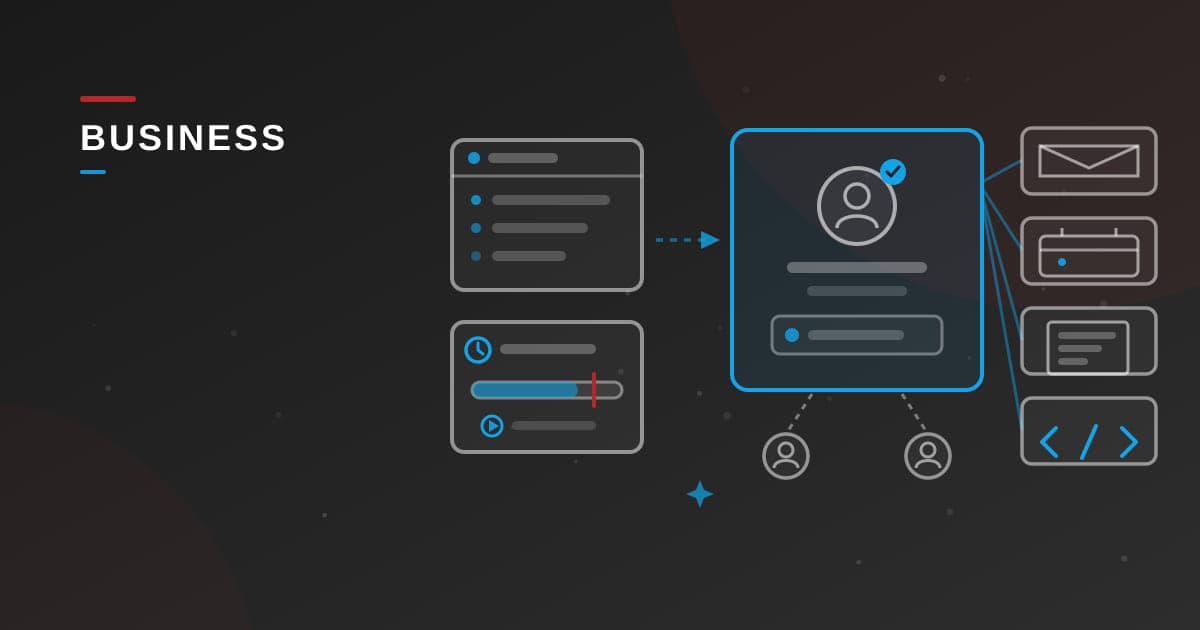
The most striking design choice is the coworker agent: an organisation can give Gemini a lasting role, with its own email address, calendar, storage space and entry in the company directory. This is not a gimmick: it forces you to ask about a piece of software the questions you ask about a hire — scope of the role, responsibilities, supervision, room for error.
AI costs become a product feature
Second strong signal: cost control is presented as a core argument, not a footnote. The platform orchestrates several models — the Gemini family and, as of today, Claude models from Anthropic — and automatic routing picks, for each task, the model aiming at the best performance at the lowest cost. Above all, a hard spend cap can be set per project in the billing console: once reached, the agent pauses and resumes with a single click. Google notes in passing that its per-token prices have dropped 98 percent since 2024.
For finance teams the message is clear: AI budget steering moves out of the spreadsheet and into the product. It is now a purchasing criterion to demand from any vendor, on a par with security.
Governance modelled on employees
Each agent gets its own identity, cryptographically attested and, in Google’s words, governed like an employee: least-privilege permissions, actions written to an audit trail and attributed to the agent — not to the person who launched it. Execution happens in a sandbox with its own network boundary, behind a gateway that enforces the organisation’s policies in real time: a policy written once applies to every agent in the company. Specialised variants, with confidence scores and source traceability, arrive in preview for financial services and legal.
Who is concerned, and for what gains
Organisations already on Workspace are served first, but the announced availability in Microsoft 365 and Slack widens the target to most work environments. On results, Google cites Commerzbank, down from 20 hours to 1 hour for document quality checks, Nokia, which reports up to 80 percent less incident resolution time, and Hitachi, which claims around 200 use cases and up to 30 percent productivity gains. These figures come from the vendor and its customers: treat them as orders of magnitude to validate on your own processes, not as a contractual promise.
What we recommend you start
- Inventory three to five measurable, repetitive processes — document handling, reporting, internal support — and pick one as a pilot, with a before/after baseline.
- Put governance into your purchasing criteria: the agent’s own identity, an audit trail, least privilege and a spend cap should become requirements, whatever the vendor.
- Turn on cost caps from day one of the pilot: an agent working for days without a budget guardrail is a risk, not a gain.
- Capture your know-how as reusable skills shared across teams, rather than stacking up new one-off tools.
The direction is clear: the agent becomes a piece of work infrastructure, with the governance requirements of an employee and the budget trade-offs of a cloud service. At Smart & Solid Solutions, we help organisations frame these pilots — scope, measurement, governance. Let’s talk about your case.
Happy to help.
Let’s discuss your project.